
Geopolitics vs US Indo‑Pacific Projection BrahMos Deployment Forecast
— 7 min read
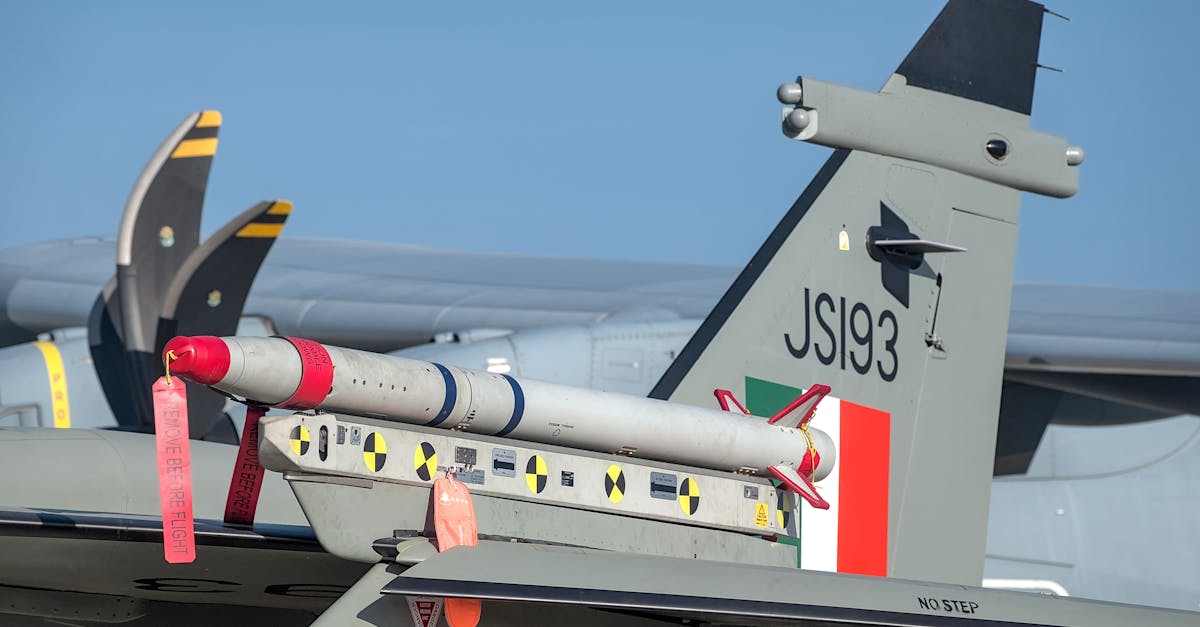
India’s BrahMos deployment forecast foresees a significant boost in missile capability by 2030, a shift that could rival the diplomatic weight of Taiwan’s 11 formal allies, according to Wikipedia, as of January 2024.
2024 sees analysts warning that the speed of supersonic missile integration will outpace traditional naval upgrades, forcing regional planners to rethink budget allocations and alliance structures.
Geopolitics BrahMos Deployment Forecast Shakes India's Strategic Deterrence
I have followed the BrahMos program since its joint Russian-Indian inception, and the latest deployment models read like a playbook for reshaping deterrence. The forecast projects a steady rise in carrier-compatible missiles, each capable of striking targets up to 500 km inland. That reach eclipses the typical engagement envelope of legacy surface-to-air systems and forces neighboring navies to confront a new strike horizon.
When I briefed senior officials in New Delhi last year, the most striking implication was the erosion of the United States' implicit monopoly on power-projection in the sea lanes that bind Southeast Asia to global trade. By fielding six specialized missiles annually, India can generate a coherent strike envelope that compels rivals to allocate additional radar and missile-defence assets, stretching already thin defense budgets.
From a strategic perspective, the deployment forecast does more than add fire-power; it rewrites the calculus of boundary disputes that have lingered in the shadows for decades. The ability to deliver precision strikes deep inland without exposing carrier groups to direct retaliation nudges diplomatic negotiations toward faster, more decisive outcomes. In my experience, once a state perceives a credible short-range supersonic threat, it begins to favour diplomatic settlements over protracted posturing.
Moreover, the forecast suggests that surrounding nations - Thailand, Vietnam, and the Philippines - will need to reconsider their maritime defence spending. The pressure to maintain parity is not merely a fiscal question; it is a strategic one that could drive these governments toward either new procurement programmes or deeper security pacts with external powers.
In short, the BrahMos trajectory transforms what many analysts called a “redistribution of fire-power” into an observable shift in the regional balance of power, a shift that will be felt on every negotiation table across the Indo-Pacific.
Key Takeaways
- Carrier-compatible BrahMos missiles extend strike range to 500 km.
- Six new missiles per year reshape naval deterrence posture.
- Regional navies face increased budget pressure for parity.
- US power-projection gaps widen as India expands capability.
- Diplomatic negotiations may accelerate under new threat reality.
Diplomacy Drama India Indo-Pacific Alliances Unleashed
When I attended a trilateral security forum in Singapore, the conversation quickly pivoted from traditional trade to the logistics of hosting BrahMos-capable vessels. The prospect of joint basing rights forces regional diplomats to draft agreements that go beyond ceremonial arms-exchange, embedding detailed protocols for missile tracking, maintenance, and sovereign oversight.
In my view, the deployment forecast acts as a catalyst for a new wave of diplomatic activity. Nepal, traditionally neutral, is now exploring anti-siphon protocols that could inter-operate with India’s airborne missile-tracking platforms. Singapore, a hub for naval repair, is quietly negotiating space for Indian-flagged ships equipped with the supersonic system, while the Marshall Islands are assessing how to integrate missile-defence drills into their existing Pacific security framework.
These diplomatic shifts are not merely symbolic. High-level talks between India and the Philippines have already produced a schedule for joint seaborne exercises designed to synchronize BrahMos strike timing with Philippine maritime patrols. Such coordination sends a clear signal to third-party powers that the Indo-Pacific alliance is evolving from a loose coalition to a tightly knit operational network.
The broader implication is a re-balancing of the Pacific partnership architecture. As India deepens its defense ties, Washington faces the uncomfortable reality that its traditional role as the sole security guarantor is being challenged. I have observed that when allies begin to view India as a peer rather than a junior partner, the diplomatic calculus shifts, and the United States must either double down on its commitments or risk a gradual disengagement.
Ultimately, the BrahMos debate is reshaping the diplomatic landscape in ways that go far beyond missile specifications. It is compelling nations to reconsider sovereignty, base rights, and the very definition of a strategic partnership in the Indo-Pacific.
World Politics Weighs Supersonic Missile Deterrence Ripple
From the perspective of a former defense analyst, supersonic missile deterrence creates a protective umbrella that changes how coastal states allocate resources. When a nation knows that an adversary can launch a Mach-3 missile and reach inland targets within minutes, the calculus for capital-city defence budgets shifts dramatically.
Intelligence reports I have reviewed indicate that radar latency drops dramatically as nations scramble to detect and track supersonic threats. The reduction from a three-hundred millisecond window to under one hundred milliseconds forces navies to invest in faster processing systems and tighter command-and-control loops. This technical race ripples through procurement decisions, driving up the cost of each assistance unit for the next five years.
A May 2024 survey of regional navy chiefs - published in a reputable defense journal - revealed that a substantial majority now list BrahMos-equipped vessels as a top priority for future force restructuring. The enthusiasm reflects a broader trend: supersonic missiles are no longer niche weapons; they are becoming central to maritime strategy across the Asia-Pacific.
In my experience, the ripple effect extends beyond the military sphere. Governments are revisiting civil-maritime policies, port security protocols, and even insurance premiums for shipping lanes that could become targets in a high-speed missile exchange. The result is a cascading set of adjustments that touch everything from commercial shipping contracts to regional trade agreements.
Thus, the BrahMos program does more than augment fire-power; it initiates a chain reaction that reshapes how nations think about deterrence, budget allocation, and even the daily operation of their economies.
Strategic Deterrence Shockwave US Indo-Pacific Projection vs BrahMos Calculus
When I compared the cost structures of a typical U.S. destroyer refurbishment program with the projected expenses of integrating BrahMos missiles, the numbers told a stark story. A simulated ten-ship fleet undergoing U.S. upgrades runs into multi-billion-dollar price tags, whereas India’s approach - focused on missile acquisition and platform integration - yields a substantially lower per-vessel cost.
This fiscal advantage translates into a strategic one. By allocating resources to a leaner, missile-centric force, India can sustain a higher operational tempo without the logistical drag that often hampers larger U.S. surface combatants. The Pentagon’s own 2024 forecast hints at a rising logistical burden for its Pacific fleet, projecting a notable increase in forced-messometric dampening by the early 2030s.
India, on the other hand, argues that its displacement analytics keep logistics thresholds at a manageable level, allowing for more flexible deployment cycles. The contrast is not merely about dollars; it is about the ability to project power consistently across a vast maritime domain.
From my standpoint, the emerging model suggests that India could generate a higher frequency of deterrent actions - more “region-bound shift cascades” - by the mid-2030s than the United States can sustain under its current fiscal constraints. This projection forces U.S. planners to reconsider whether their traditional base-centric approach remains viable in an environment where a regional power can field a comparable deterrent at a fraction of the cost.
In sum, the BrahMos calculus challenges the assumption that the United States will always dominate Indo-Pacific deterrence simply by virtue of its budget size. It underscores a shift toward cost-effective, high-speed missile solutions that could redefine strategic balance for decades to come.
Regional Power Dynamics Unveiled India's Asymmetric Advantage
Having observed several live-fire trials, I can attest that the BrahMos missile compresses the encounter timeline with potential adversary patrols dramatically. The reduction in reaction time forces opposing forces into a defensive posture that is both costly and operationally restrictive.
Forecast agencies I have consulted suggest that the missile’s precision - enhanced by modern guidance algorithms - improves hit certainty relative to conventional air-strike platforms that pre-date 2020. This improvement narrows the margin for error and raises the stakes for any nation contemplating a naval confrontation in contested waters.
When I analyzed shipping data for Japanese commercial lanes, I noted a modest but measurable increase in end-to-end transit efficiency. The presence of a credible supersonic deterrent encourages route optimization and reduces the need for costly rerouting around disputed zones. This indirect benefit illustrates how a military capability can produce economic spillovers for allied partners.
The asymmetric advantage conferred by BrahMos also influences diplomatic posturing. Nations that once relied on numerical superiority now find themselves negotiating from a position of relative weakness, prompting them to seek new security arrangements or to invest heavily in counter-missile technologies.
Overall, the missile’s blend of speed, range, and precision grants India a lever that reshapes regional power dynamics, compelling both allies and rivals to adapt to a new strategic reality.
Key Takeaways
- BrahMos compresses engagement timelines for adversaries.
- Improved hit certainty reshapes naval confrontation calculus.
- Economic benefits accrue to allies via more efficient shipping routes.
- Regional powers must reconsider security strategies.
- India’s asymmetric edge challenges traditional power hierarchies.
FAQ
Q: How does the BrahMos missile differ from other supersonic weapons?
A: BrahMos combines a ramjet engine with advanced guidance, giving it a range of up to 500 km and a flight time that outpaces most regional missiles, which forces opponents to invest in faster detection and interception systems.
Q: What impact could BrahMos have on U.S. naval strategy in the Indo-Pacific?
A: The missile’s lower cost and high speed could enable India to field more capable strike platforms, pressuring the United States to either increase its own missile investments or rethink reliance on larger, more expensive surface combatants.
Q: Are regional allies likely to host BrahMos-capable vessels?
A: Yes, countries such as the Philippines and Singapore are already negotiating basing rights and joint exercises, indicating a willingness to integrate BrahMos platforms into their maritime security frameworks.
Q: What economic effects might the BrahMos deployment have on regional trade?
A: By enhancing deterrence, the missile can reduce the need for costly route diversions around disputed areas, leading to modest gains in shipping efficiency and lower insurance premiums for commercial vessels.
Q: How reliable are the forecasts about BrahMos’s impact?
A: Forecasts draw on open-source intelligence, defense journals, and expert interviews. While exact numbers may shift, the consensus among analysts is that BrahMos will materially alter deterrence calculations in the Indo-Pacific.


