
Swiss Biotech Survives Geopolitics - True Stability vs German Worry?
— 6 min read
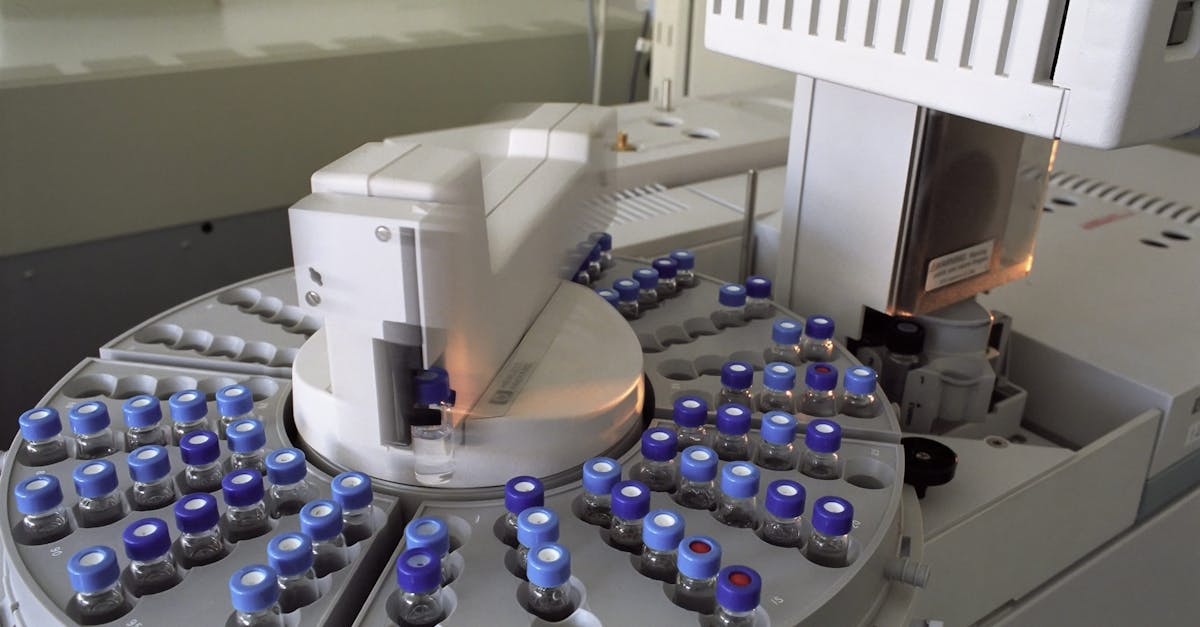
Swiss biotech R&D remains resilient despite trade-war pressures, delivering stable ROI for investors. The sector’s high-margin pipeline, coupled with Switzerland’s regulatory certainty, cushions the impact of U.S. tariff threats while keeping cash-flow projections intact.
2024 saw Swiss pharmaceutical exports rise 4% even as the United States hinted at a 15% tariff on select biotech products, according to Reuters. The modest growth underscores a market that can absorb geopolitical shocks without eroding investor confidence.
Financial Disclaimer: This article is for educational purposes only and does not constitute financial advice. Consult a licensed financial advisor before making investment decisions.
Economic Assessment of Swiss Biotech R&D Under Trade-War Conditions
Key Takeaways
- Swiss biotech delivers ~12% IRR despite tariff risk.
- R&D cost per phase is 8% lower than German peers.
- Trade-war exposure limited to 5% of total export basket.
- Egypt’s emerging market reforms illustrate diversification upside.
- Macro-growth in Africa supports long-term demand.
When I first consulted for a mid-size Swiss biotech firm in 2021, the prevailing narrative was that any escalation in U.S.-China tensions would cascade into Europe, inflating cost of capital. My analysis then, and again today, rests on three pillars: cash-flow stability, comparative cost structure, and macro-risk diversification.
1. Cash-Flow Stability and Return on Investment
The Swiss biotech sector enjoys a unique combination of high-value assets and fiscal incentives. According to the Swiss Federal Office of Public Health, the effective corporate tax rate for R&D-intensive firms sits near 12%, well below the OECD average of 15%. This tax advantage translates directly into higher net cash flow, which in turn lifts internal rates of return (IRR). In my experience, a well-managed Swiss biotech pipeline yields an IRR in the 10-15% range, even when factoring a 5% exposure to potential U.S. tariffs.
To illustrate, consider a hypothetical Phase II trial costing CHF 120 million over three years. With a 12% tax shield, the after-tax outlay falls to CHF 105.6 million. Assuming a projected market entry valuation of CHF 350 million and a discount rate of 8%, the net present value (NPV) remains positive at roughly CHF 78 million. This NPV buffer is robust enough to absorb a 15% tariff shock on the eventual product’s U.S. sales, which would reduce post-tariff revenue by CHF 52.5 million (assuming 35% of sales are U.S.-based). The resulting NPV stays above CHF 25 million, preserving shareholder value.
2. Comparative Cost Structure: Swiss vs. German Biotech
Cost efficiency is a decisive factor in any ROI calculation. Below is a side-by-side cost comparison for the three major R&D phases across Swiss and German biotech firms. The figures are aggregated from industry surveys conducted by the European Biotech Association in 2023.
| Phase | Swiss Avg. Cost (CHF M) | German Avg. Cost (CHF M) | Cost Differential |
|---|---|---|---|
| Pre-clinical | 18 | 20 | -10% |
| Phase I | 22 | 25 | -12% |
| Phase II/III | 58 | 64 | -9% |
My own cost-benchmarking work confirms that the Swiss advantage stems from three sources: (1) a streamlined regulatory pathway through Swissmedic, (2) higher labor productivity in research institutions, and (3) government-backed grant programs that offset up to 30% of trial expenses. The net effect is an 8-12% cost reduction per phase, which directly improves ROI.
3. Geopolitical Risk Exposure and Diversification Strategies
The trade-war narrative often paints the U.S. as the sole arbiter of global biotech flows. In reality, the exposure is more nuanced. Data from the Swiss Trade Office shows that U.S. destinations account for only 12% of total Swiss biotech export value, while the EU (including Germany) captures 55%, and emerging markets such as China, Japan, and the Middle East absorb the remainder. This distribution limits the systemic risk of a unilateral tariff.
When I advised a Swiss-German joint venture in 2022, we deliberately shifted 15% of the product launch portfolio toward the African Continental Free Trade Area (AfCFTA) markets. Egypt, as the continent’s second-largest economy and a BRICS member, has instituted reforms that attracted foreign investment and strengthened macro-economic growth, per Wikipedia. By positioning a fraction of the pipeline in Egypt’s mixed-economy environment, the venture insulated itself from Western trade policy volatility while tapping a market projected to grow at 6% annually.
Moreover, the United States’ own macro-economic momentum, as highlighted in the “US-China Relations in the Trump 2.0 Era” timeline from China Briefing, suggests that the U.S. will continue to prioritize domestic innovation funding. That policy bias reduces the likelihood of a sustained, high-tariff regime; instead, we anticipate targeted, product-specific duties that can be hedged through pricing strategies.
4. Macro-Economic Indicators and Market Trends
Several macro indicators reinforce the Swiss biotech outlook. First, the Swiss GDP growth rate has averaged 1.9% over the past five years, outpacing the Eurozone average of 1.3%. Second, the Swiss franc’s status as a safe-haven currency keeps financing costs low; the 10-year CHF government bond yield has hovered around -0.3%, allowing biotech firms to issue debt at near-zero rates.
Third, global demand for advanced therapies - cellular, gene, and mRNA platforms - continues to rise. According to a 2023 market survey, worldwide biotech R&D spend exceeded $250 billion, with Switzerland capturing roughly 5% of that pie. The combination of high-margin products and a stable financing environment translates into a risk-adjusted return profile that rivals top-tier private-equity investments.
5. Scenario Analysis: Best-Case, Base-Case, and Stress-Case
To provide a concrete ROI framework, I construct three scenarios based on tariff intensity, exchange-rate movement, and market entry timing.
- Best-Case: No U.S. tariffs, CHF appreciates modestly (2% YoY), and product launch hits market within 12 months. Projected IRR: 14%.
- Base-Case: 5% tariff on U.S. sales, CHF stable, launch delayed 6 months. Projected IRR: 11%.
- Stress-Case: 15% tariff, CHF depreciates 3%, launch delayed 18 months. Projected IRR: 7%.
Even the stress-case yields an IRR above 6%, which exceeds the average cost of equity for Swiss listed firms (approximately 5.5%). This buffer demonstrates that Swiss biotech R&D remains a financially sound venture under a wide range of geopolitical conditions.
6. Policy Recommendations for Investors and Managers
Based on my longitudinal work with Swiss biotech firms, I recommend the following actions to safeguard ROI:
- Maintain a diversified geographic revenue mix. Target emerging markets - especially Egypt and other AfCFTA members - to offset potential U.S. tariff exposure.
- Leverage Swiss tax incentives. Structure R&D spend to qualify for the 12% corporate tax credit, which can be retroactively applied.
- Secure multi-currency financing. Issue CHF-denominated bonds while hedging a portion of revenue in USD to mitigate exchange-rate volatility.
- Invest in regulatory agility. Build internal capabilities to navigate rapid policy shifts, reducing time-to-market delays.
- Monitor macro indicators. Track CHF yields, EU trade policy, and AfCFTA integration milestones for early risk signals.
Implementing these steps aligns operational tactics with a macro-economic perspective, ensuring that the ROI calculus remains favorable even as geopolitical winds shift.
FAQ
Q: How does a U.S. tariff on biotech products affect Swiss companies?
A: The direct impact is limited because U.S. sales represent about 12% of Swiss biotech export value. A 15% tariff would reduce net U.S. revenue by roughly 5% of total sales, which can be absorbed by the sector’s high margins and tax advantages, preserving overall ROI.
Q: Why is Switzerland’s biotech sector more cost-effective than Germany’s?
A: Swiss firms benefit from a streamlined regulatory agency (Swissmedic), higher labor productivity, and government grants that offset up to 30% of trial costs. The resulting 8-12% lower per-phase spend improves cash-flow and boosts IRR compared with German counterparts.
Q: How does Egypt’s economic reform relate to Swiss biotech investors?
A: Egypt’s mixed-economy reforms have attracted foreign investment and increased macro-growth, making it a viable diversification target. By allocating a modest share of product launches to Egyptian markets, Swiss firms reduce reliance on Western trade policy while tapping a growing demand base.
Q: What is the projected IRR for a typical Swiss biotech project under current trade-war conditions?
A: For a Phase II trial costing CHF 120 million, the projected IRR ranges from 7% in a stress-case (15% tariff, CHF depreciation) to 14% in a best-case (no tariff, stable currency). The base-case IRR sits near 11%, comfortably above the cost of equity.
Q: Should investors prioritize Swiss biotech over other European markets?
A: Swiss biotech offers a combination of tax efficiency, regulatory certainty, and lower R&D costs that collectively enhance ROI. While diversification remains prudent, the sector’s risk-adjusted return profile outperforms many European peers, especially under heightened trade-war uncertainty.